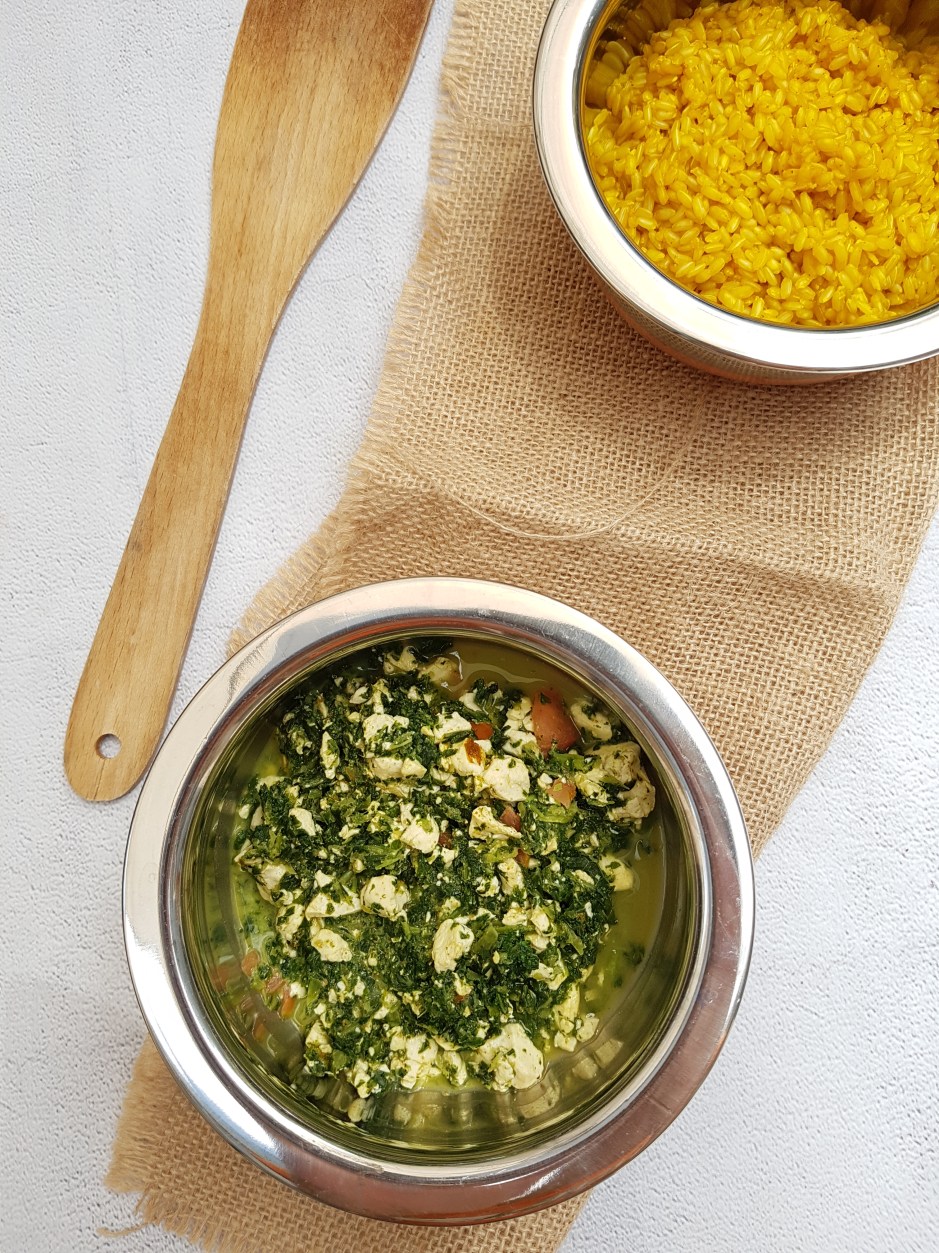
Indian cuisine is delicious, flavourful, nourishing and has great options for vegan and gluten free dietary requirements. But let’s face it, with its ample use of oil, cream and cashews, it is generally not the healthiest food going around. If you fancy spicy Indian flavours without sacrificing your waistline, I am here to your rescue with this super-quick, ultra-easy, mega-delicious and, yup, healthy vegan palak paneer (aka tofu and kale curry).
I know that palak means spinach and not kale, and that paneer is the name of an Indian cow’s milk cheese, neither of which feature in this dish. Consider my version as a hipster take on palak paneer: lots of protein and only very little fat from silken tofu in combination with superfood kale. Though it is a perfectly good option to use spinach or other leafy greens here, kale is what I had on hand, so kale it was. You could use firm tofu instead of silken tofu here, but I find the silken tofu makes this dish a bit more creamy.
This healthy vegan palak paneer is really easy to put together with just a handful of basic ingredients. Hello easy weeknight meal. Probably the only obscure ingredient I used was powdered peanut butter aka pb2 which might be hard to get so you can use ground cashews instead which would be more authentic but also packs more fat. I used a very light coconut milk for drinking from Vitasoy with only 2% fat which is almost nothing but still conveys this dreamy coconut flavour. You could use a fuller fat coconut milk or other plant milk instead.
Healthy Vegan Palak Paneer
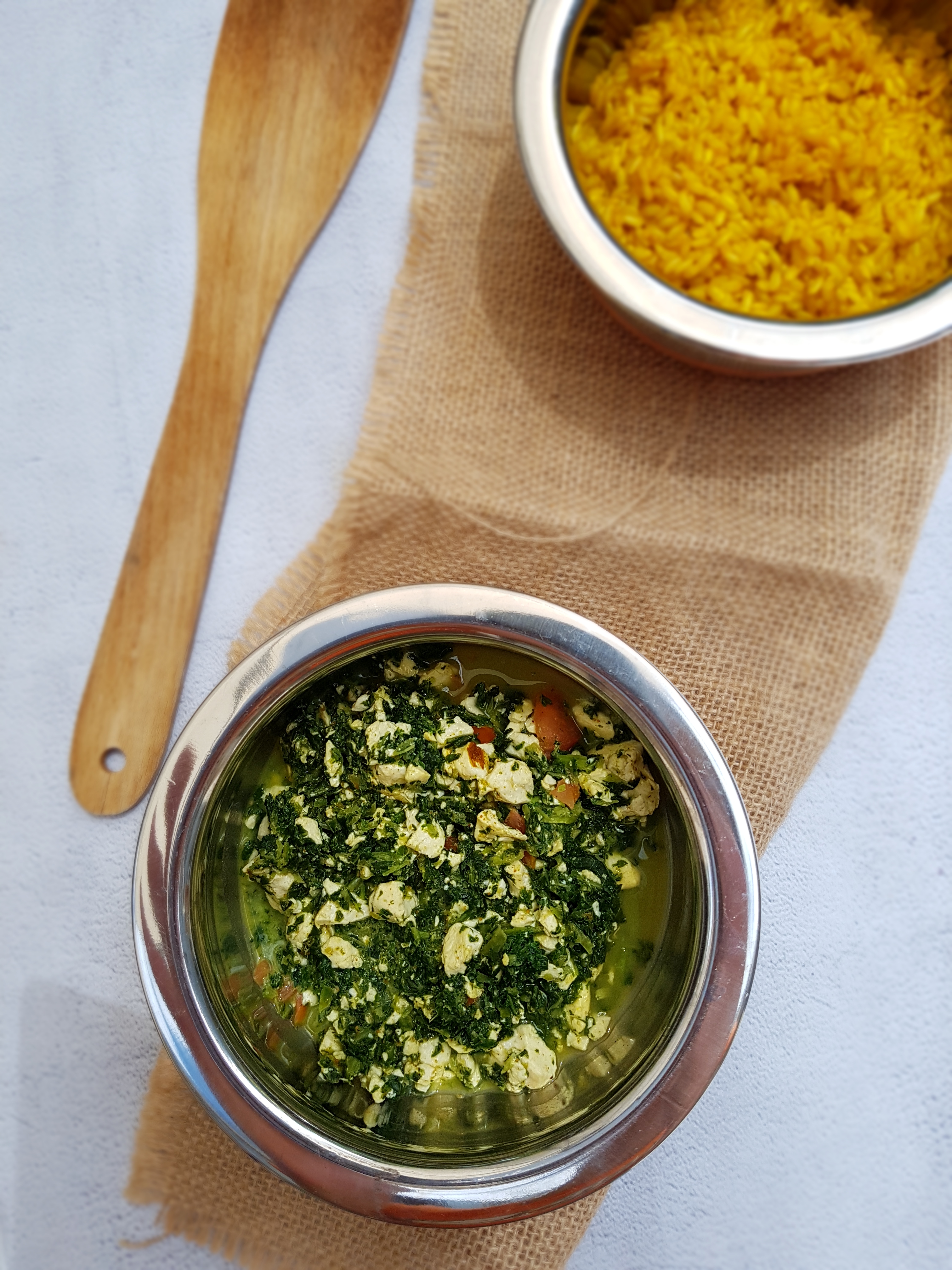
Healthy Vegan Palak Paneer
Serves 2
1 block (300g) silken tofu, pressed to remove moisture and cubed half a tsp or more of sea salt 4 tsp powdered garlic 1 tsp ground ginger 1-2 tsp mild or hot curry powder or garam masala pinch of kashmiri chilli if you like it hot 250g fresh or frozen kale, thawed half a cup very light coconut milk or plant milk 2 tbsp powdered peanut butter or ground cashews a tbsp desiccated coconut
Heat the tofu in a large frying pan with salt, garlic, ginger, curry powder and chilli. You can use a bit of oil or, as I prefer, a bit of water to prevent sticking. Cook for a minute, add the milk, then add the kale and mix with the tofu without breaking up the tofu too much (it should still have the shape of cubes). Adjust the spices according to your tastebuds and cook a few more minutes until your desired consistency is achieved. Add the powdered peanut butter or ground cashews and coconut. Serve with saffron rice or with my 5-minute gluten free naan.
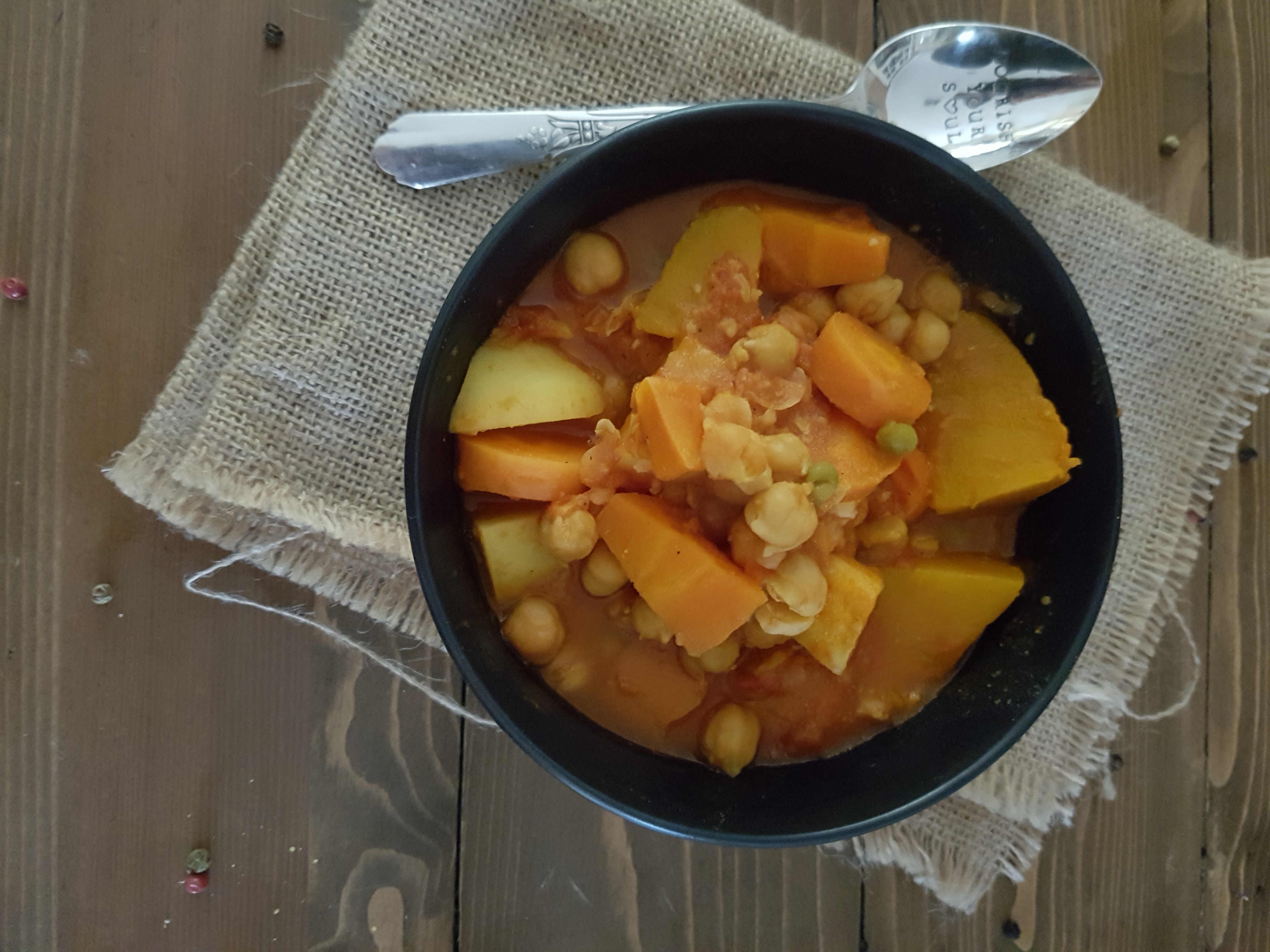
There is just nothing quite like curry. It is comforting, nourishing, versatile, flavoursome, filling, easy and inexpensive. It is a great way to use up leftovers and is the perfect candidate for making in batch and then freezing. The only downside is that traditional Indian, Thai and Malaysian curry recipes with their oodles of oil and coconut cream are far from being a “diet food”. While this is not a problem if you indulge once in a while or are not concerned about your physique, there are certainly options to “healthify” a good curry without compromising on taste, and my healthy pumpkin and chickpea curry is one such example.
Curries are especially suitable for creating lower fat and lower calorie versions of. Due to their ample amounts of fragrant herbs and spices, you don’t need to add much oil at all to carry the flavours. Chili, curry powder, pepper and co. satisfy your taste buds without the need for a tin of coconut cream per portion, and also provide a healthy kick for your metabolism. Healthy curries are a reality!
This healthy pumpkin and chickpea curry is not only yummy, it is also easy as. A handfull of ingredients you likely have sitting in your pantry right now and a maximum of 20-25 minutes of your time, of which the actual hands-on time is very little. Sounds good? Go see for yourself!
Healthy Pumpkin and Chickpea Curry
Healthy Pumpkin and Chickpea Curry
Serves 4
3 garlic cloves, minced 4 large carrots, washed, peeled and chopped 1 large potato, peeled and chopped (may be parboiled to speed up cooking time) 250 g pumpkin, peeled and chopped (may be parboiled to speed up cooking time) 125 g cauliflower, washed and torn into florets 125 g green peas, fresh or frozen 1 400 ml tin of diced tomatoes 350 ml vegetable stock 2 tins of chickpeas, rinsed and drained (reserve the brine for chocolate mousse!) 1 cup almond milk or very light coconut milk half a tbsp mild curry powder salt and pepper to taste dash of tomato sauce
Heat the garlic in a large saucepan until aromatic. Add the carrots, potato, pumpkin, cauliflower and peas and cook for a few minutes while stirring. Add the tomatoes, stock and spices and cook until vegetables are tender. Then stir in the chickpeas, milk and tomato sauce and heat until thoroughly warm.
There’s something about curries on a Friday night, isn’t it? I know so many folks – us included – for who Friday night means snuggling up on the couch with a favourite Thai or Indian takeout and a good bottle of wine. It is as if all the stress of the week just disappears with a bowl of steaming, fragrant curry. So warm, comforting and satisfying! I have to admit, I love our local Thai (and judging from the Menulog reviews, I’m not the only one), but I also love to know what’s in my food and while takeaway-wise you can certainly do worse than Asian, it doesn’t hurt to make your own version of it once in a while – which is also more cost-effective.
While this recipe is by no means traditional and doesn’t claim to be, it is nonetheless yummy, filling, and very easy, quick and cost-effective to prepare. I don’t know about you, but that’s big ticks in my book! In any case, it is prepared more quickly than the arrival time of the average takeaway so if you are like us and starving on a Friday night, here we go! Granted, you don’t get a free can of soda like you get with our Thai, but maybe it’s better that way (it goes much better with a glass of good red, preferably organic, of course). Plus, you can rest assured that there’s no nasties in there, and that it will please herbivores and omnivores alike. It is low carb if you serve it with my new discovery that is cauliflower rice, and it is also very low in fat if you use almond or other plant milk instead of coconut milk. Needless to say, it is gluten free like anything on this blog, and it is also vegan (although you can use meat or fish instead of the tempeh).
Which leads me to the next topic – yes, tempeh is soy. Yes, this blog is meant to be soy free and I generally advise to stay away from soy. BUT – tempeh is actually fermented soy, which along with miso and natto is soy as it is meant to be (and how Asians consume it). The fermentation improves the digestibility of soy and according to a study the bioavailability of calcium in tempeh is higher than in cow’s milk! So how about telling that a dairy-proponent when they ask “But where do you get your calcium from?” While popular soy products such as tofu and soy milk give me terrible digestive distress, I never have any issues with the underrated tempeh, so I would recommend trying it if you usually have problems with soy. I just love that it is so versatile. Just pan-fry it for a few minutes and it is ready to go. Due to its neutral flavour, it absorbs other flavours easily, meaning you can marinate it in your favourite sauce, and it is a great filler for soups, salads and sandwiches to bulk up the protein.
Now, given that I’m a health nut, I am admittedly quite late to jump on the cauliflower rice bandwagon. But after trying this recipe, I am hooked! I’d highly recommend trying for yourself. The best thing for me – almost better than the calorie saving and the health benefits – is that cauliflower rice is quicker to prepare than traditional rice! And while we’re at it, did you know you can use cauliflower to make cauliflower mash to replace potato mash? Have you tried roasting the florets and having them as a much healthier, tastier and more easily digested snack alternative to nuts? You can try roasted cauliflower as a delish addition to your favourite salad, and if you are into creamy pasta sauces, there is this absolutely cracking recipe for a vegan paleo alfredo sauce that doesn’t call for cream, coconut, bucket loads of cashews or silken tofu, simply by achieving a creamy “alfredo” style sauce with cauliflower, plant milk and nutritional yeast! I used verjuice instead of the wine and added some mushrooms – yum! So the question is – what CAN’T you do with cauliflower? (It doesn’t drive you to work, I suppose)
Please don’t get me wrong – this is not a crusade against carbs! I don’t advocate a very low carb diet, and you can do this recipe great justice by adding your usual rice. But one cup of cauliflower provides 90% of your daily vitamin C, along with vitamin K, thiamin, riboflavin, niacin, magnesium, phosphorus, fiber, vitamin B6, folate, pantothenic acid, potassium, and manganese. Not shabby! Especially now in the shoulder season where an extra dose of vitamins and minerals never goes astray. Add to that a heap of fresh vegetables, anti-inflammatory and antioxidant spices and antiviral coconut oil, and you know why this curry makes you feel so good!
Serves 4-6
1 tbsp coconut oil 1 onion, finely chopped (leave out for low FODMAP) 1 tbsp minced garlic (great against candida, but leave out for low FODMAP) half a tbsp turmeric half a tbsp chili powder half a tbsp curry powder (feel free to add any other spices you like – this is what I had in the cupboard and it goes a long way) 2 400 g tins diced tomatoes, not drained 250 ml vegetable stock 100 ml plant milk of choice half a head of cauliflower, chopped into small florets (you can use the other half of the cauliflower for your rice) 500 g vegetables of choice (broccoli, green beans, peas, carrots, capsicum…), all cut into 1 inch pieces 300 g tempeh, cut into half inch pieces
Melt the oil in a large heavy-bottom saucepan, add the onions and garlic if using as well as the spices and fry for a few minutes until the onion and garlic are soft and the spices are fragrant. Add more oil or water if necessary. Add the diced tomatoes and stock, bring to the boil, then turn the heat down and stir in the milk once it has cooled slightly. Throw in all the veggies and simmer until the veggies are cooked to your liking. Double check the sauce and correct the spices if necessary – add more if too bland or tone it down with some milk if too spicy.
Meanwhile, prepare your rice and the tempeh. Marinate the tempeh in your favourite sauce such as tamari, then pan-fry (no oil needed) from all sides until golden brown, about 4-5 minutes. Serve the curry with your choice of rice (I recommend cauliflower rice!) and add the tempeh on top or mix it all in. Tatses great straight away and even better the next day!




 Nat's Ladle